
Academic Resources: Tools for Developing Analytical Thinking to Provide Actionable Insights In this auspicious occasion, we are delighted to delve into the intriguing topic related to Academic Resources: Tools for Developing Analytical Thinking to Provide Actionable Insights. Let’s weave interesting information and offer fresh perspectives to the readers.
Academic Resources: Tools for Developing Analytical Thinking to Provide Actionable Insights
In today’s world, overflowing with information, the ability to analyze and interpret data is paramount. Whether you’re a student tackling a research paper, a professional navigating complex business decisions, or simply an individual seeking to understand the world around you, analytical thinking is a crucial skill.
While the term "analytical thinking" might sound intimidating, it’s essentially a process of breaking down information, identifying patterns, and drawing meaningful conclusions. It’s about thinking critically, questioning assumptions, and formulating solutions based on evidence.
This blog post explores a range of academic resources that can equip you with the tools and techniques to develop your analytical thinking skills. We’ll delve into various methods, strategies, and resources, ultimately empowering you to navigate information effectively and arrive at actionable insights.
1. The Power of Questions: Unlocking Critical Analysis
The foundation of analytical thinking lies in asking the right questions. Instead of passively absorbing information, engage with it actively by questioning its validity, context, and implications. This critical approach helps you move beyond surface-level understanding and delve deeper into the subject matter.
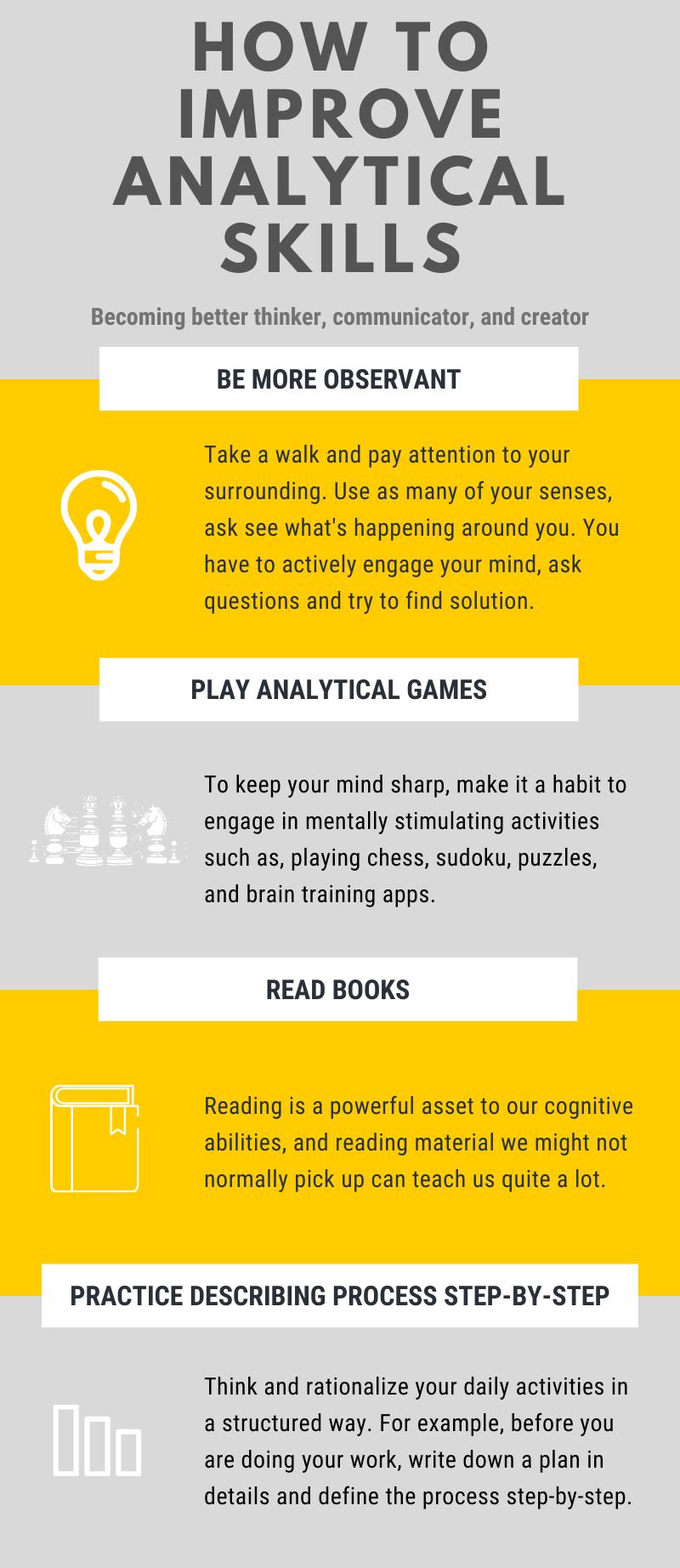
Here are some powerful question starters to cultivate your analytical thinking:
- Why? – Explore the reasons behind a phenomenon, event, or argument.
- How? – Investigate the process, mechanisms, or methods involved.
- What if? – Consider alternative scenarios, possibilities, and outcomes.
- So what? – Analyze the significance and implications of the information.
- What are the assumptions? – Identify underlying beliefs or biases influencing the information.
2. The Art of Observation: Uncovering Patterns and Connections
Effective analytical thinking involves meticulous observation and a keen eye for detail. Pay attention to the nuances, subtle cues, and underlying patterns within the information you encounter. This requires a systematic approach and the ability to connect seemingly disparate pieces of information.
Here are some techniques to enhance your observational skills:
- Active Reading: Engage with the text by highlighting key points, taking notes, and summarizing the main ideas.
- Mind Mapping: Visually represent the information by connecting ideas, concepts, and relationships.
- Data Visualization: Use charts, graphs, and diagrams to visually represent data and identify trends.
- Comparative Analysis: Compare and contrast different sources, perspectives, and arguments to uncover similarities and differences.

3. The Framework of Logic: Building Strong Arguments
Analytical thinking involves constructing logical arguments based on evidence and reasoning. Develop a clear understanding of logical fallacies and learn to identify them in your own thinking and in the arguments of others. This critical awareness helps you avoid making faulty deductions and build robust arguments that are sound and persuasive.
Here are some key logical frameworks to consider:
- Deductive Reasoning: Start with a general premise and apply it to specific cases to reach a conclusion.
- Inductive Reasoning: Observe specific instances and generalize them to reach a broader conclusion.
- Analogical Reasoning: Draw parallels between different situations to understand and interpret information.
- Causal Reasoning: Identify cause-and-effect relationships to explain events and outcomes.

4. Academic Resources: Your Gateway to Analytical Development
A wealth of academic resources are available to support your journey towards becoming a more analytical thinker. These resources can provide valuable frameworks, tools, and techniques to enhance your critical thinking skills.
Here are some key categories of academic resources:
- Textbooks: Offer comprehensive overviews of specific subjects and provide structured frameworks for analysis.
- Academic Journals: Publish peer-reviewed research articles that showcase rigorous analysis and critical thinking.
- Online Databases: Provide access to a vast collection of academic resources, including articles, books, and data sets.
- Coursework: University courses in critical thinking, logic, and research methods can equip you with specialized skills.
- Online Platforms: Websites like Coursera, edX, and Khan Academy offer courses and resources on analytical thinking and related topics.
5. Practical Applications: Translating Analysis into Actionable Insights
The ultimate goal of analytical thinking is to generate actionable insights that can inform decisions, solve problems, and drive positive change. This involves translating your analysis into clear, concise, and impactful recommendations.
Here are some strategies for translating analysis into actionable insights:
- Identify Key Findings: Summarize the most important conclusions from your analysis.
- Formulate Recommendations: Propose specific actions based on your findings.
- Evaluate Feasibility: Assess the practicality and feasibility of your recommendations.
- Communicate Effectively: Clearly articulate your findings and recommendations in a compelling and persuasive manner.
6. Cultivating Analytical Thinking: A Lifelong Journey
Developing analytical thinking is a continuous process that requires ongoing practice, reflection, and a willingness to challenge your own assumptions. Embrace a mindset of curiosity, skepticism, and a desire to understand the world around you.
Here are some tips for cultivating analytical thinking throughout your life:
- Stay Informed: Read widely, explore diverse perspectives, and engage with current events.
- Seek Feedback: Ask for feedback on your analyses from trusted mentors, peers, or experts.
- Reflect on Your Thinking: Regularly evaluate your thought processes and identify areas for improvement.
- Embrace Challenges: Seek out opportunities to apply your analytical skills in new and challenging contexts.
Conclusion
Analytical thinking is a powerful tool that empowers individuals to navigate the complexities of the modern world. By harnessing the resources and strategies outlined in this blog post, you can develop your critical thinking skills and transform information into actionable insights.
Remember, analytical thinking is a lifelong journey. Embrace the challenges, cultivate your curiosity, and continue to refine your skills to navigate the world with confidence and clarity.
Closure Academic Resources: Tools for Developing Analytical Thinking to Provide Actionable Insights
Thus, we hope this article has provided valuable insights into Academic Resources: Tools for Developing Analytical Thinking to Provide Actionable Insights. We hope you find this article informative and beneficial. See you in our next article!
Related Articles: Academic Resources: Tools for Developing Analytical Thinking to Provide Actionable Insights


Leave a Comment